
Christiansburg Previous Residents by Era
Different sources answer different questions about previous residents. Recorded deeds follow ownership, while the directory, census, obituary, and newspaper layers can document an address or household at a particular point in time. Montgomery’s online index is helpful but incomplete for image access and older material. Start with the newest parcel and deed evidence, then move backward through the source that matches the time period.
| Source | Years It Covers | Where Held | What It Shows |
|---|---|---|---|
| Fincastle and Montgomery deeds | 1773-1777 Fincastle; Montgomery from 1777 | Clerk, LVA, Logan/SRA, FamilySearch | Ownership and legal-description chain; online image cutoff is not published. |
| LVA general deed indexes | 1773-1933 | Library of Virginia catalog and microfilm | Name-to-instrument bridge, not a continuous modern address index. |
| Montgomery plats | 1773-1890 | LVA and Circuit Clerk | Lot, subdivision, and land-description bridge. |
| Tri-city directory | 1932 | Blacksburg Museum digitized PDF | Christiansburg, Cambria, and Blacksburg resident or business snapshot. |
| Directory reel lead | 1902-1906, with 1903 missing; later 1907-1909 lead | Repository to be verified | Possible earlier address lead, not a confirmed complete run. |
| Federal census | 1790-1950 public | National Archives and library databases | Household snapshot, not an annual record. |
| Local newspaper OCR | 1950-2003 local runs; older LVA titles | MFRL, Advantage Preservation, and LVA | Moves, notices, obituaries, organizations, and business references; OCR varies. |
| Chancery | 1773-1938, with bulk scans through 1913 | LVA, then local Clerk for later files | Land disputes, heirs, roads, and related evidence. |
| Probate and wills | Wills 1777-1903; index 1773-1952 | Clerk, LVA, and FamilySearch | Heirs, fiduciaries, assets, and possible address clues. |
A record can establish ownership without establishing who lived there, and a directory listing can establish a dated listing without proving ownership. That distinction keeps the backward trail honest.
Start Christiansburg Previous Residents at the Parcel
Choose one stable address, then collect the identifiers that survive when a street label changes. In the Montgomery Commissioner of Revenue address search, record the situs address, tax-map number, current assessed owner, owner mailing address, and legal description. Open the parcel in MyGIS OneView to compare its lot shape, subdivision context, road alignment, and adjacent parcels.
The tax-map number and legal description are more durable than an address label. The mailing address is only where tax correspondence is sent. It can be useful for interpreting the assessment card, but it is not evidence that the assessed owner occupies the parcel. MyGIS is also reference-only, even though county parcel data are updated monthly. Use it to orient the record trail, then confirm ownership in the Clerk’s land records.
Note: Keep the situs, mailing address, parcel number, and legal description in separate fields in research notes.
Christiansburg Previous Residents Deed Chain
Deeds provide the backward ownership trail for a Christiansburg address. Begin with the current assessed owner and legal description, then search that owner as a grantee in the Montgomery Circuit Clerk index. Compare the returned instrument to the target parcel before copying the seller or grantor. Next search that seller as a grantee for the earlier acquisition. Repeating that pattern moves backward through recorded transfers and avoids treating a deed of trust, satisfaction, or assignment as a sale.
- Collect the current owner, parcel number, and legal description from the Commissioner portal.
- Search the owner as grantee in Logan Systems land records or the Clerk index, using name variants and organization names where needed.
- Read the deed index entry or image, and record the grantor, instrument type, recording date, book and page or instrument number, and legal description.
- Search the prior grantor as grantee, then test the resulting legal description against the same parcel or lot.
- When the remote trail stops, use the public inspection route at the Clerk, LVA catalog or microfilm, FamilySearch, and the Clerk copy procedure.
- Grantor
- The party transferring an interest in land in a recorded instrument.
- Grantee
- The party receiving that interest. Searching the seller as a later grantee is the key backward step.
- Chain of title
- The sequence of recorded transfers connected by the same land description.
- Legal description
- The deed’s durable land language, such as a lot, subdivision, acreage, plat, or town or district reference.
Virginia SRA and COVERS is one remote index route identified for land records where available.
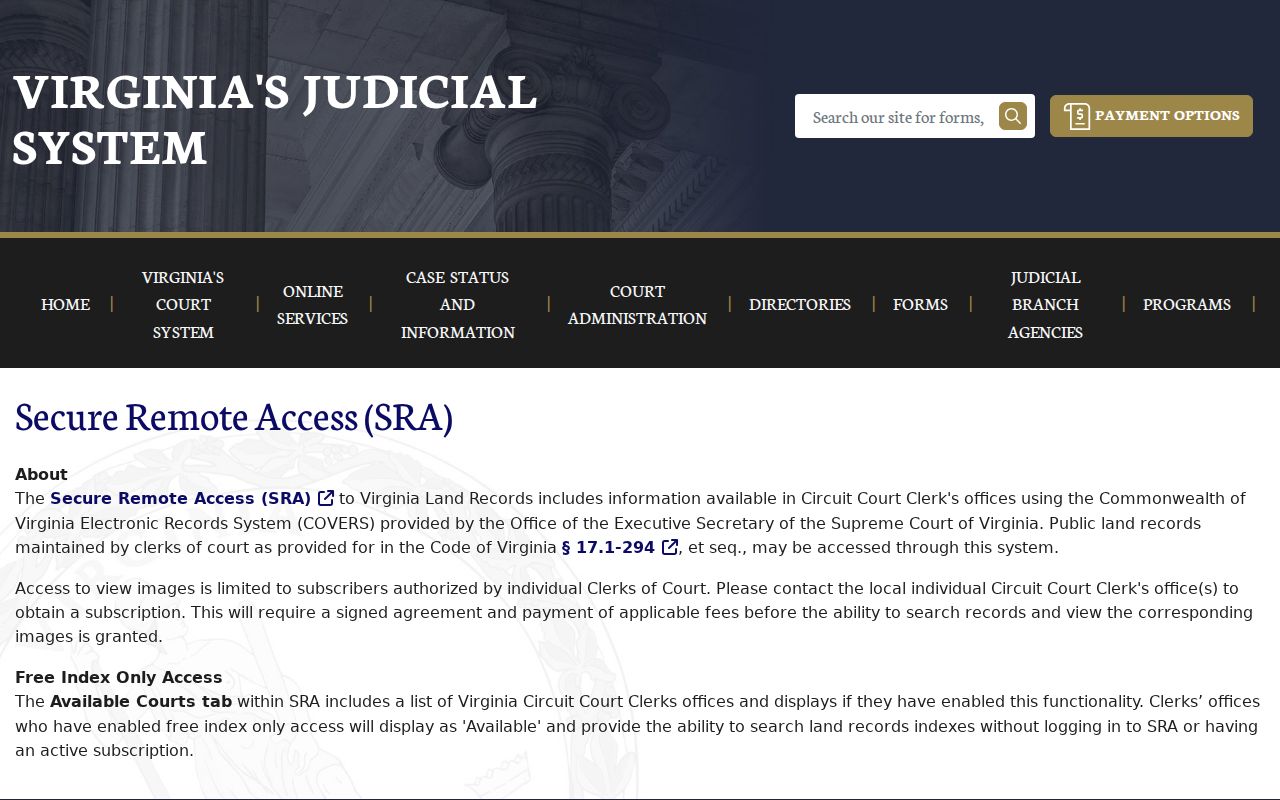
SRA access is generally index-only, and images can require a Logan subscription or Clerk-authorized access. The Clerk record room remains the authoritative fallback for older books and records not available online.
Fincastle Bridge for Previous Residents
Montgomery County formed from Fincastle County, so an early land trail can cross a jurisdiction boundary without a family move. Montgomery books begin in 1777, while Fincastle material covers 1773 through 1777. LVA’s Montgomery catalog identifies deed books beginning in 1777, general deed indexes from 1773 through 1933, and plats from 1773 through 1890. Search the predecessor county name when the earliest transfer seems to vanish at the Montgomery boundary.
The Library of Virginia catalog, Clerk material, and FamilySearch are complementary access routes. Some FamilySearch images can require a free account or library access because partner agreements restrict them. The exact earliest Logan index year and online-image start were not verified. That is an access caveat, not a reason to invent a complete online deed run.
FamilySearch catalog entry 373892 is a catalog lead for Montgomery land, deed, and will records.
Catalog entries help locate a film, book, or collection, but they do not promise that every image is open online. Confirm access with the holding institution before relying on a remote session.
1932 Christiansburg Previous Residents Snapshot
The verified 1932 volume is titled City Directory of Christiansburg, Va., Cambria, Va., Blacksburg, Va. 1932. It is a searchable scan that combines the three nearby communities in one volume. Its alphabetic resident and business entries can supply a spelling, address, occupation or business association, and place heading, but it is a snapshot rather than a complete ownership history. Its exact publisher and the meaning of every possible abbreviation or occupancy notation were not confirmed in the research.
Search all three place headings before deciding a person is absent. Then pair a matching entry with the parcel, deed chain, and public census schedules. For the directory collection itself and its access details, use the Christiansburg city directory page. Earlier 1902-1906 and 1907-1909 reel material is only a catalog lead, with 1903 missing, and no continuous local reverse-directory run was verified.
Pair Christiansburg Previous Residents With Census
Directories and census schedules work better as a two-source flow. The directory gives a date-specific address or business clue; a nearby census can show a household snapshot. Public federal schedules currently run through 1950 under the 72-year rule. Use 1930 and 1940 as checks around the 1932 volume, while allowing for spelling differences, shifting boundaries, and different household definitions. The census is not a street-by-street annual directory.
- Copy the directory spelling, initials, address, and place heading exactly.
- Check the 1930 and 1940 census schedules for a household that matches the person, locality, and age range.
- Use the parcel card and deed chain to distinguish an owner record from a directory or census household.
- Search newspaper notices between snapshots for a move, death, marriage, business change, or estate reference.
- Keep unresolved same-name results as candidates until the address or land description provides a match.
For an earlier period, add the 1893-1894 Montgomery business-directory transcription, LVA newspapers, deeds, chancery, church or cemetery sources, and the catalog reel lead. A listing may omit people who were not captured by that source.
Christiansburg Newspaper and Probate Endpoints
When a deed chain no longer answers the question, newspapers and probate can close an address trail. MFRL’s digital local-news archive includes Montgomery newspaper material from 1950 through 2003, while the Christiansburg archive and Library of Virginia title listings offer other search routes. Search an address, street variant, neighborhood term, person name, and business name. OCR can misread names, so open the page image before treating a result as reliable.
For an estate, the Circuit Clerk holds probate, wills, fiduciary records, and related files. A probate appointment requires the original will, death certificate, list of assets, and list of heirs. A public file may provide an heir, fiduciary, property, or mailing clue, but inspection and copy access remain file-specific. Obituaries can identify family and a last address, yet they should be compared with Clerk evidence and vital-record access rules.
The Library of Virginia chancery availability page is a useful historical route for land and heir disputes.
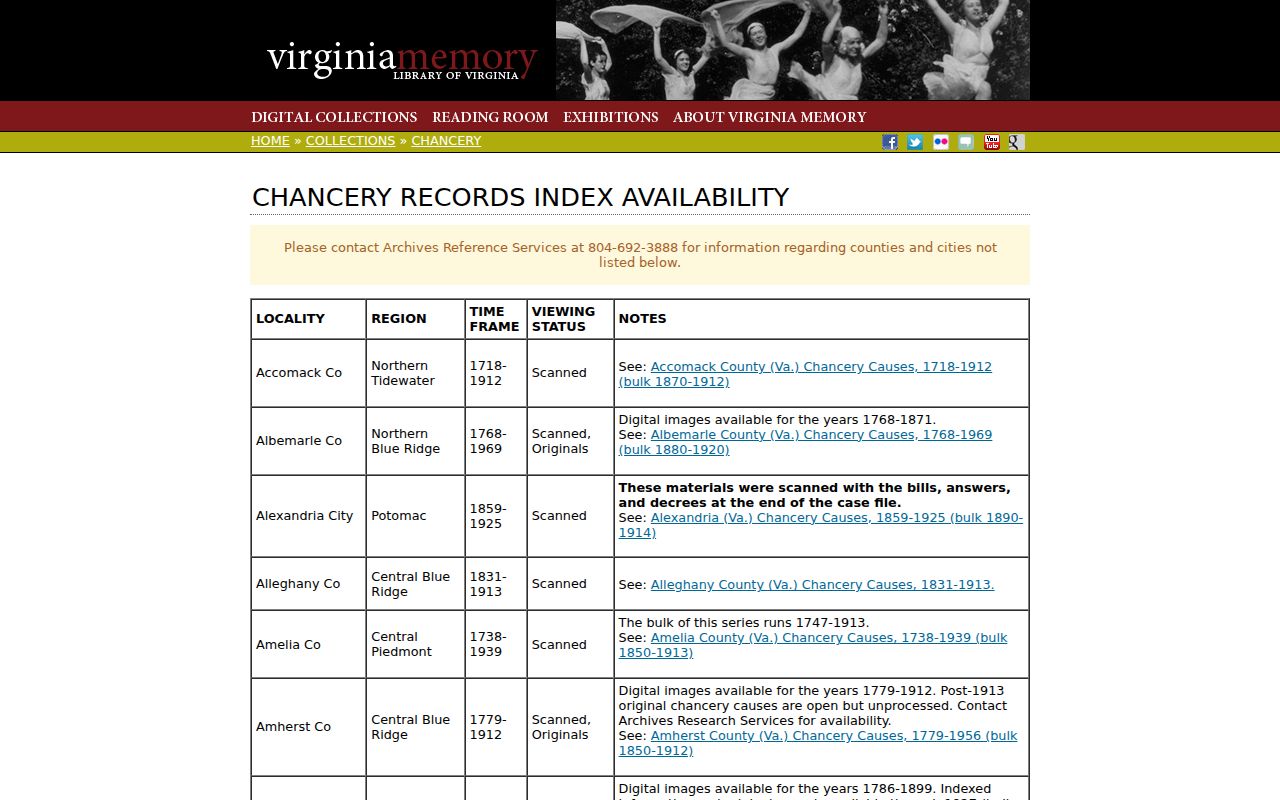
Montgomery chancery runs from 1773 to 1938, with bulk material through 1913 scanned at LVA and later files at the Circuit Clerk. It can add context to a land trail, but it does not document every owner.
Note: A newspaper mention or probate clue should be treated as a lead until its name, date, and parcel context agree.
Cross, Franklin, and Cambria Previous Residents
Christiansburg’s address history has local naming traps. Present Franklin Street was historically Cross Street. Cambria’s railroad-era place name remains in older material, and Cambria consolidated with Christiansburg on December 31, 1965. An address can therefore appear under Cross or Cambria in one record and Franklin Street or Christiansburg in a later one without any deed transfer.
Use both old and current terms in the deed index, 1932 directory, newspapers, and local-history searches. Main, Depot, Station, Cambria, Front, Hall, Holmes, and Sunnyside are useful historic place terms. Let the legal description and plat bridge the records when the street number or postal label does not match. No verified town-wide street-renumbering project or year was found, so it should not be asserted.
Christiansburg Previous Residents Research Limits
Montgomery Museum’s Light Library holds colonial-to-present local history, family files, yearbooks, census and obituary material, African American resources, local-history books, and a 1952-1998 newspaper collection. Its staff may assist with targeted research by appointment, but the museum notes that its small size limits extensive work. MFRL can direct visitors to genealogy databases and newspapers. Neither the town nor the library published a dedicated house-history guide, confirmed reverse-directory shelf, Sanborn index, or paid research service in the sources reviewed.
For an unverified Sanborn map run, search the Library of Congress and university or library map collections under Christiansburg, Cambria, and Montgomery County. Do not cite map years until a holding catalog confirms them. A permit, assessor sketch, renovation notice, or deed date can help date a change, but none alone proves a transaction date or a past household.
Lawful use. Use previous-resident records for house history, family history, estate work, or personal research. Do not use an address, obituary, deed, or map result to stalk, harass, threaten, repeatedly contact, or locate a protected living person.
Virginia’s Address Confidentiality Program law protects qualifying participants through a designated address and mail-forwarding arrangement. Do not try to reconstruct a suppressed location from separate public records.